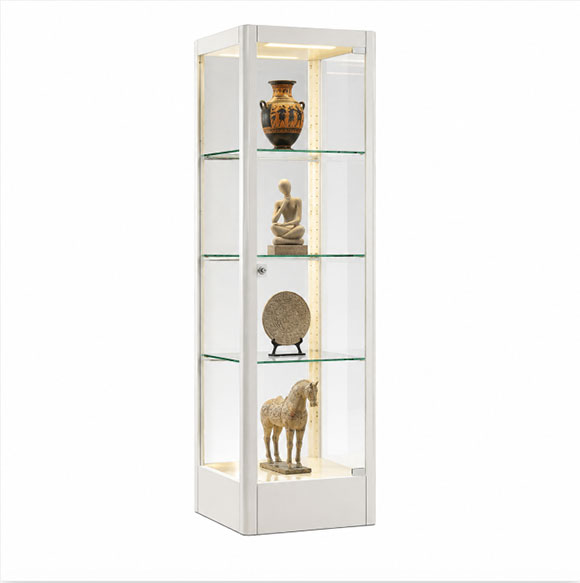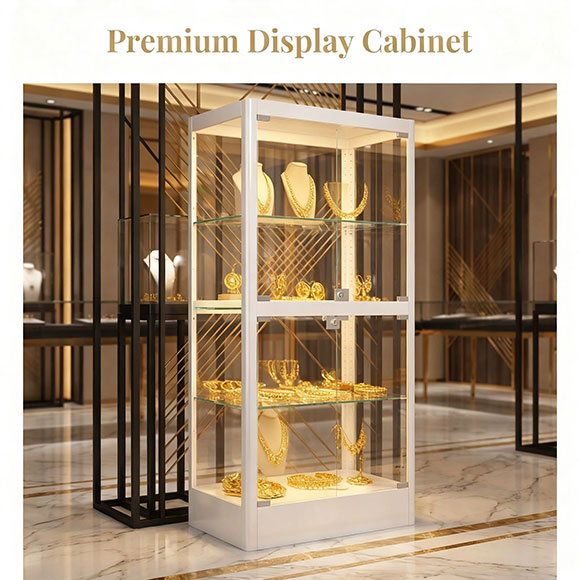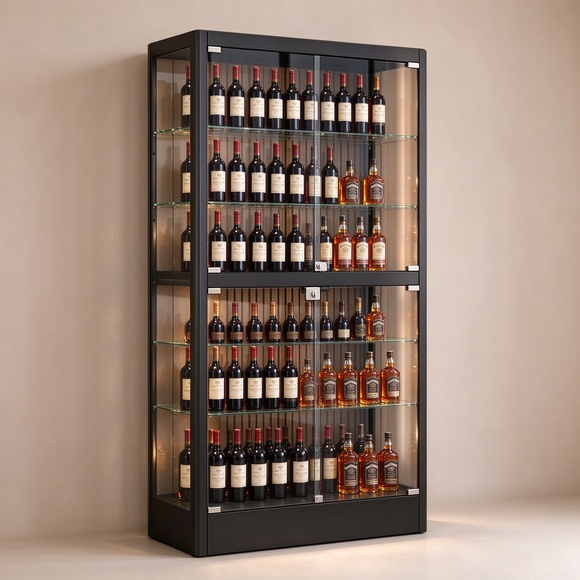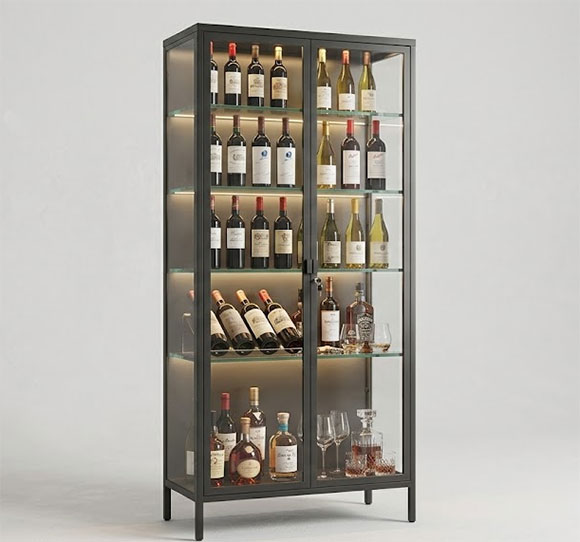
Whiskey Display Cabinet with Lock for Liquor Stores — Compact Glass Bar Cabinet That Sells
Whiskey sells when customers can see it
A bottle of whiskey sells when a customer can see it. That sounds obvious, but most liquor stores bury slow movers on a shelf behind the counter, labels facing the wall. A lockable whiskey display cabinet fixes that. It puts the bottle at eye level, behind glass that stays clean, with a lock that keeps stock honest.
This guide is written for liquor store owners, importers, and bar suppliers who are deciding whether a glass bar cabinet is worth the floor space. It covers what to check before you buy, what sizes fit a small shop, and how to stock the cabinet so bottles actually move.
Why a whiskey display cabinet outsells a plain shelf
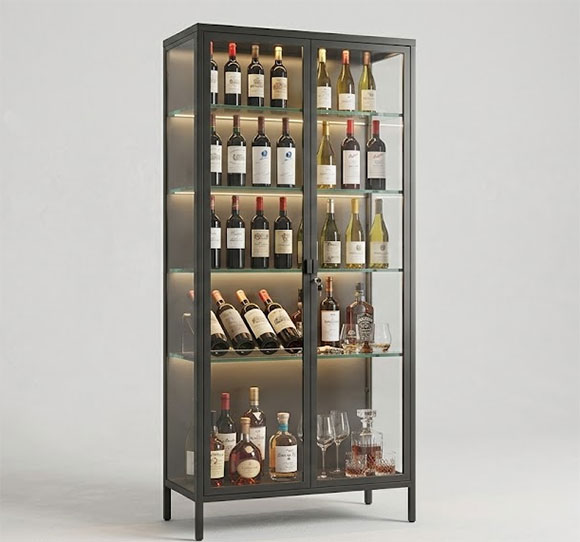
Three things happen when you move whiskey from a back shelf into a lit glass cabinet.
- Customers see the label. Whiskey is an impulse buy. The amber color, the label design, the light hitting the bottle — that is what triggers the sale. A closed shelf hides all of it.
- The stock looks valuable. Glass and lighting signal “worth more.” Customers accept a higher price point when the product is presented well.
- Staff stop losing bottles. A lock does more than stop theft. It stops casual pours, “testing” bottles, and inventory that never matches the book.
Retailers who test this usually see one result: the same whiskey sells faster from the display than it did from the shelf.
What to check before you buy
Not every glass cabinet is right for whiskey. Go through this checklist before you order.
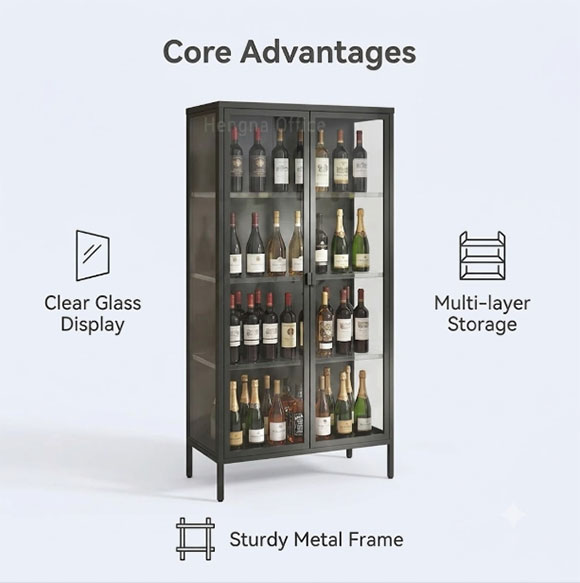
- Tempered glass doors. Tempered glass breaks into small blunt pieces instead of sharp shards. For a storefront with foot traffic, this is not a luxury.
- A sturdy metal frame. Wood warps and swells in humid climates, and a warped frame means doors that no longer close. A steel frame stays square for years.
- A real lock. Look for a lockable door you can key separately, not a flimsy latch. If the cabinet holds premium bottles, treat the lock like a security decision.
- Adjustable shelves. Whiskey comes in different heights — tall 1L bottles, squat decanters, gift tins. Fixed shelves force you to waste space.
- LED lighting. Light sells the bottle. A top-mounted LED bar keeps the whole cabinet visible without heat buildup.
- A compact footprint. If the shop is tight, a narrower cabinet against a wall beats a wide one that blocks the aisle.
Compact sizes that fit a small shop
Floor space is the real cost of any display. For most liquor stores, a floor-standing cabinet around 1800mm tall with 5 shelves fits a standard wall and holds enough to look full.
| Spec | Typical value | Why it matters |
|---|---|---|
| Height | 1800mm (71 in) | Fits under ceiling obstructions; top shelf still reachable |
| Shelves | 5 adjustable | Holds tall bottles on one shelf, decanters on another |
| Doors | Double tempered glass, lockable | Full view from both sides of the aisle |
| Frame | Powder-coated steel | Scratch-resistant, easy to wipe down |
| Lighting | LED (optional) | Highlights labels without heating the bottles |
| MOQ / lead time | Confirmed in the quotation | Varies by model and quantity |
Custom sizes are available. Tell us your wall width and bottle mix, and we will confirm the configuration in writing.
The lock is not optional
Whiskey is the most pilfered category in small liquor retail. A lockable door changes the math: it stops walk-out theft, stops staff sampling, and stops the “I thought we had two more” problem at inventory time. If the cabinet holds bottles over a certain value, buy the lock.
Dust is the second reason. Open shelving in a store means a thin film of dust on every label within weeks. Sealed glass doors keep bottles looking like they arrived yesterday — which is exactly how they should look.
Metal frame over wood
For a commercial setting, a metal frame is the safer call. Wood expands and contracts with humidity, doors start to bind, and the finish wears where customers touch it. A powder-coated steel frame handles the daily cycle of a busy store: open, close, wipe, repeat. It also ships more compactly, because the frame does not need the same protective packaging as finished wood.
How to stock a whiskey display cabinet
Once the cabinet is in place, how you stock it decides how much it sells.
- Front-face the bottles. Labels to the glass, not the back. The label is the ad.
- Use eye level for the money bottles. The second shelf from the top gets the most attention. Put the higher-margin whiskey there.
- Leave space, don’t cram. A full cabinet looks like a warehouse. A cabinet with breathing room looks curated.
- Rotate stock. Old stock to the front, new stock behind. A display cabinet is also a stock control tool.
- Keep the glass clean. A fingerprint on the glass is a fingerprint on the brand. Include a glass cleaner in the daily routine.
Where to put it: placement matters more than price
Where the cabinet stands decides how many people see it, and seeing it is the first step of the sale. Put a whiskey display cabinet where the customer already stops: near the register, by the door on the way out, or at the end of an aisle. A cabinet against a dark back wall gets walked past; a cabinet in the path of checkout gets looked at twice.
Keep the front of the cabinet clear. A display that is blocked by boxes, a mop bucket, or another shelf might as well be in the stockroom. Give it its own light — the LED bar matters most in a dimly lit store. And leave the top shelf for the bottles you want to move this month. That shelf is your best merchandising real estate, so treat it like the front page of a newspaper.
Wholesale, shipping, and custom orders
These cabinets are manufactured by HNJUNTUO, an export factory in Luoyang, China. We supply liquor stores, importers, and bar-fitout suppliers with glass display cabinets for retail programs — not just single units.
- OEM / ODM. Custom size, custom color, your logo on the cabinet. We work from your drawings.
- Bulk pricing. Pricing tiers depend on quantity. Send your volume and we will quote.
- Shipping. We ship by sea for bulk orders; packaging details and lead time are confirmed in the quotation.
- After-sales. Spare keys, hinges, and glass are available for the models we sell.
FAQ
Are the glass doors tempered?
Yes, the display cabinets we supply use tempered glass for the doors and shelves. Confirm the glass specification for the model you choose.
Can I get a custom size?
Yes. Custom width, height, shelf count, and color are available for wholesale orders. Send your wall dimensions and we will confirm the configuration.
What is the minimum order quantity?
MOQ depends on the model and whether the order is standard or custom. It is confirmed in the quotation — we do not publish a one-size number because it changes with configuration.
Do the cabinets ship flat-pack?
Some models ship assembled, others ship KD (knock-down) to save freight. The shipping method is confirmed per order, and assembly instructions are included.
Do you offer LED lighting?
Yes. LED lighting is available on our glass display cabinets and is a common choice for whiskey displays, because it shows the label without heating the bottle. Confirm the lighting option when you request the quotation.
How do I request a quote?
Send us the quantity, the wall or floor dimensions, and your target price. We reply within 24 hours with a written quotation including specs, packaging, and lead time.