How Many Bottles Fit a Wine Display Cabinet? — Real Capacity Guide for Bar and Retail Buyers
The short answer: about 60 to 120 bottles
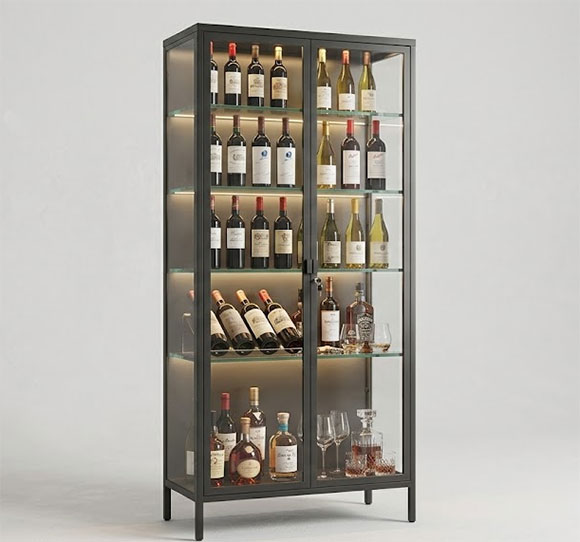
A standard floor-standing wine display cabinet with double glass doors holds roughly 60 to 120 bottles, depending on its width, shelf count, and how you pack the shelves. That range is wide on purpose — the real number is decided by four things you control. This guide walks through them so you can estimate how many bottles fit a wine display cabinet for your own bar or store before you call a supplier.
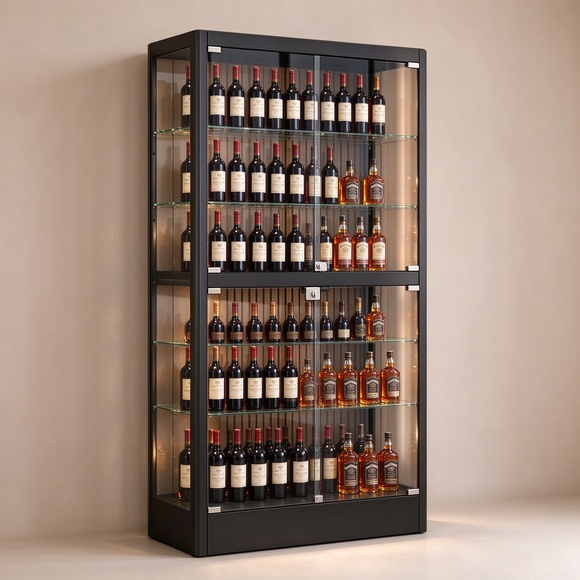
Four things that decide bottle capacity
- Cabinet width. A 900mm-wide cabinet fits roughly one and a half times the bottles of a 600mm-wide unit at the same depth. Width is the single biggest capacity lever.
- Number of shelves. Most floor-standing models come with 4 to 6 adjustable shelves. More shelves usually means more bottles — but only if the shelf spacing still clears your tallest bottle.
- Bottle diameter and height. A standard 750ml wine bottle is about 75–80mm wide and around 300mm tall. Champagne and large-format bottles take more room. Measure your actual stock mix, not the average.
- How you pack. Bottles standing one deep fit fewer per shelf than bottles two deep. Retail displays and back-bar storage pack differently because they serve different jobs.
Standard bottle sizes you will be planning around
| Format | Typical height | Typical diameter | Space note |
|---|---|---|---|
| Standard 750ml | ~300mm | ~75–80mm | The benchmark for most capacity math |
| Champagne / sparkling | ~320–340mm | ~85–90mm | Taller and thicker; check shelf spacing |
| 1L / 1.5L large format | 350mm+ | 90mm+ | Usually needs a dedicated shelf gap |
| Whiskey / spirits | ~280–320mm | ~70–85mm | Often square or shouldered; plan by width |
These are typical ranges for planning, not a guarantee for every brand. Measure the tallest and widest bottles in your actual stock before you lock a shelf plan.
How to estimate capacity for your own cabinet
You do not need a spreadsheet for this. A rough three-step count gets you within 10% of the real number.
- Count bottles per shelf. Divide the usable shelf width by your typical bottle diameter. Example: an 850mm usable shelf with 80mm bottles fits about 10 bottles standing one deep.
- Count usable shelves. Take the total shelf count and subtract one if you have very tall bottles that need a double-height gap. A 5-shelf cabinet with one tall-bottle shelf gives you 4 full shelves.
- Multiply. Bottles per shelf × usable shelves = your standing capacity. In the example: 10 × 4 = 40 bottles one deep, or roughly 80 bottles packed two deep.
Keep this simple rule in mind: one-deep displays look better, two-deep displays hold more. Choose before you order, because it changes how many shelves you need.
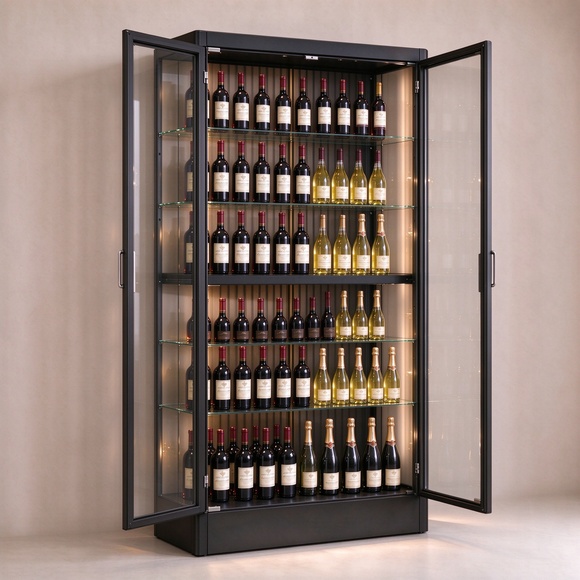
Typical capacity by cabinet size
| Cabinet width | Shelves | Rough capacity (one deep) | Rough capacity (two deep) |
|---|---|---|---|
| 600mm | 4–5 | ~35–45 | ~70–90 |
| 900mm | 4–6 | ~55–75 | ~110–150 |
| 1200mm | 5–6 | ~80–100 | ~160–200 |
These are planning ranges for standard 750ml bottles standing upright. Your supplier confirms exact shelf dimensions and capacities for the model you choose — ask for the spec sheet before you commit.
How many bottles fit — and why the number feels low
The most common reaction to a first capacity estimate is “that seems like less than I expected.” Usually the gap comes from three planning mistakes, not from the cabinet.
- Counting the cabinet as if every shelf is full. Real stock mixes have gaps — bottles are removed, restocked, reorganized. Plan for 80% utilization, not 100%.
- Ignoring the top shelf. The top shelf of a floor-standing cabinet sits high. Shorter staff and shorter customers reach it, but bottles there sell less. In a retail setting, treat the top shelf as overflow or display-only.
- Forgetting the door swing. A double-door cabinet needs clearance in front. The cabinet’s footprint is not the same as its usable floor footprint. Measure the aisle, not just the wall.
None of these reduce the physical capacity — they just make the working capacity lower than the theoretical count. Buy a cabinet sized for your working number, and you will never look at a half-empty display wondering where the stock went.
Retail displays pack differently from bar storage
A retail wine display cabinet and a back-bar wine cabinet serve different jobs, and the right capacity math is different too.
- Retail display. Front-facing labels, one bottle deep, generous spacing. Capacity matters less than how the shelf reads from the aisle. A 900mm cabinet at ~60 bottles one deep is a strong retail presentation.
- Bar back-bar. Density wins. Two deep, tighter spacing, house pours closest to hand. The same cabinet holds close to double the bottles because nobody needs to read the label from three meters away.
- Mixed use. If the cabinet does both jobs — display by day, service by night — plan one-deep on the top shelves and two-deep below. That split uses the space without hiding the front row.
What to ask for when you want a specific capacity
Tell the supplier the number of bottles and the bottle mix, and they will confirm a cabinet and shelf plan in writing. These are the questions that get you a useful answer:
- “How many shelves does the model have, and are they adjustable?”
- “What is the usable shelf width and depth?”
- “What is the maximum bottle height per shelf gap?”
- “Does the cabinet come with LED lighting, and is it optional?”
- “What is the MOQ and lead time for this model?”
MOQ, packaging, and lead time are confirmed in the quotation — they vary by model and quantity.
Capacity is not the only number that matters
Once you know the bottle count, check the things that make the cabinet usable in a real shop: lockable doors for after hours, tempered glass for safety, a steel frame that survives daily opening and closing, and LED lighting so the front row sells itself. A cabinet that holds 120 bottles but cannot be locked, cleaned, or lit is a storage unit, not a display.
We are HNJUNTUO, an export factory in Luoyang, China. We supply bars, liquor stores, importers, and distributors with glass display cabinets for wine and spirits programs. Custom sizes and shelf configurations are available — tell us your bottle count and stock mix, and we will confirm the right cabinet in writing.
FAQ
How many wine bottles fit in a standard display cabinet?
A 900mm-wide, 5-shelf cabinet typically holds about 55–75 bottles one deep or 110–150 bottles two deep with standard 750ml bottles. Exact numbers depend on the model’s shelf dimensions.
Can I fit champagne bottles in a wine display cabinet?
Yes, if the shelf spacing clears them. Champagne bottles are taller and thicker than standard 750ml bottles, so measure the tallest bottle and tell the supplier — adjustable shelves make this easy to plan.
Does bottle capacity change if I store bottles lying down?
Yes. Lying bottles down uses depth instead of height, which usually increases count per shelf but changes the look of the display. Most retail wine cabinets are planned for upright bottles.
Can I get a custom shelf layout for my bottle mix?
Yes. Custom shelf count and spacing are available on wholesale orders. Send your bottle sizes and the target count, and we will confirm the layout in the quotation.
What is the minimum order quantity?
MOQ depends on the model and whether the order is standard or custom. It is confirmed in the quotation.