Commercial Wine Display Cabinet with LED — Metal Frame Glass Case That Sells by the Glass
By-the-glass wine is a margin machine — if customers can see it
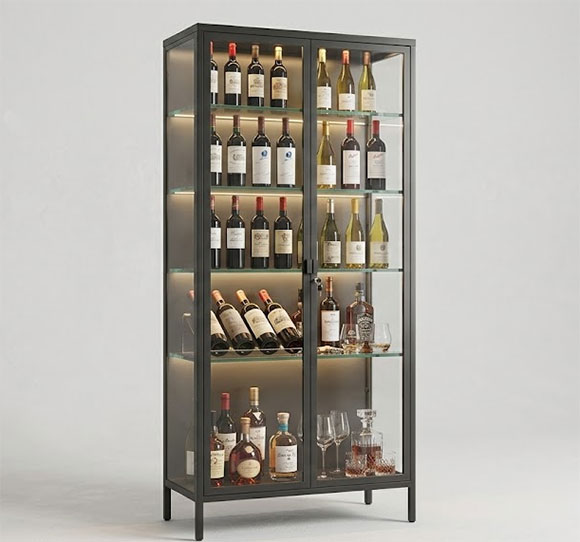
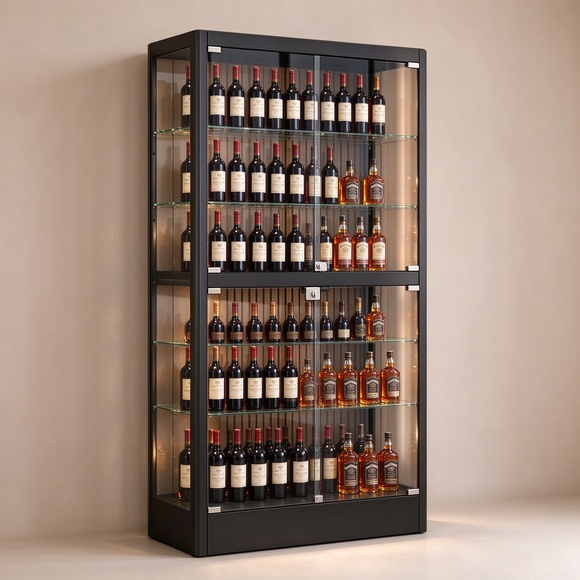
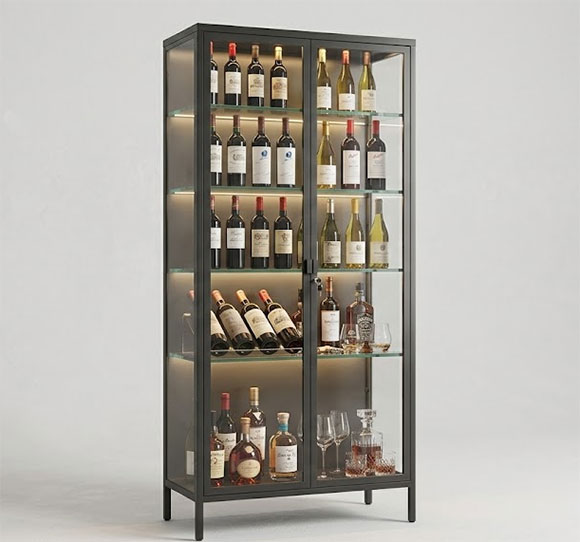
In a restaurant or hotel bar, wine by the glass carries some of the highest margins on the menu. A glass that costs the house a small slice of the bottle price sells for a large one. But by-the-glass only works when customers can see what they are buying. A commercial wine display cabinet with LED puts the bottles front and center. They sit lit, behind glass, within reach of the bartender. What was a back-counter afterthought becomes a visible upsell.
This guide is for restaurant and hotel project buyers, bar managers, and fit-out suppliers deciding what to spec. It covers why a commercial-grade cabinet pays for itself, what separates commercial from home-grade, and how to order for a project timeline.
Why a commercial wine display cabinet pays for itself
The math is straightforward for operators who run by-the-glass programs.
- Visible bottles sell themselves. A customer who sees the wine wall orders a glass they were not planning on. The cabinet is merchandising, not storage.
- Lighting raises the average check. Lit displays read as a bigger selection. Operators who upgrade from dark shelving report customers trading up on the glass pour.
- Less waste, better stock control. Open bottles oxidize. A closed, organized display keeps open stock visible, so staff use the open bottle before it turns.
- It stops shrinkage. A lockable door keeps after-hours stock honest — in hotels, staff-only bars, and event venues alike.
Commercial-grade vs. home-grade: what actually differs
| Factor | Commercial-grade | Home-grade |
|---|---|---|
| Frame | Steel frame built for daily use | Wood or lighter steel, lower cycle |
| Glass | Tempered glass doors | Can be thinner, untempered |
| Lock | Proper key lock | Often decorative or light-duty |
| Cleaning cycle | Wiped daily, survives chemicals | Cleaned occasionally |
| Lighting | LED, replaceable | Optional, often fixed |
| Best for | Bars, restaurants, hotels, venues | Homes, offices |
For a project buyer, the difference is not aesthetics — it is replacement cost. A home-grade cabinet in a busy bar fails in months; a commercial-grade frame lasts for years. Spec the grade that matches the traffic.
What to check before you spec a commercial cabinet
Project buyers need to get this right once, because reordering mid-fit-out is expensive. Work through this checklist.
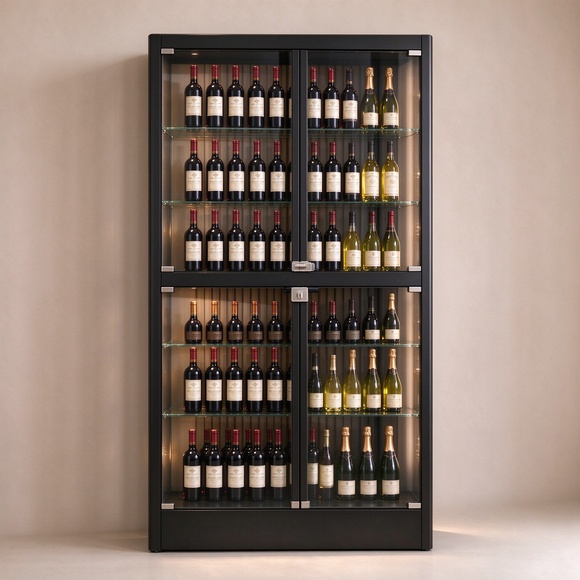
- Tempered glass doors and shelves. In a bar with foot traffic and cleaning staff, tempered glass is the safety baseline. Confirm the spec in writing.
- A lock that survives shift changes. Key control matters in hospitality. Check whether the lock is replaceable and keys are manageable per outlet.
- LED lighting with replaceable parts. Commercial lighting runs for hours daily. Choose a cabinet where the LED bar can be serviced, not buried in the frame.
- A steel frame that cleans up. Wine spills, cleaning chemicals, and ice water all land on the frame. Powder-coated steel handles the routine a wood finish cannot.
- Adjustable shelves for real bottle mixes. Your whites, reds, and large formats have different heights. Fixed shelves force waste in the most profitable display space.
- Certifications for the market. Ask for the documentation the cabinet carries — glass certification, material specs, and anything your local authority requires for commercial use.
Where commercial wine cabinets go in a venue
- Behind or beside the bar. The classic spot. Within the bartender’s reach, visible to guests, lit from above.
- At the dining room entrance. A wine wall at the entrance sets the tone before the menu arrives.
- In the lounge or lobby bar. Low-traffic wait zones where a lit display does the selling while guests wait.
- At event and banquet stations. Portable floor-standing units on wheels or light frames suit venues that reconfigure spaces.
How to stock it for by-the-glass margins
- Put the by-the-glass pours at eye level. These are the bottles that should sell first. Eye level sells; the bottom shelf stores.
- Group by type, label forward. Whites together, reds together, bubbles visible. Customers order what they can scan in one glance.
- Leave one gap per shelf. A fully packed shelf looks like inventory. One empty slot signals freshness and gives staff room to work.
- Rotate open stock forward. The open bottle that needs to move should be the easiest one to reach.
- Wipe the glass before service. In a restaurant, the cabinet is on stage from opening to closing. A two-minute glass wipe is part of the service routine.
Display cabinet, not wine fridge: know the difference
Project buyers sometimes confuse a display cabinet with a temperature-controlled wine fridge. They are different products. A wine fridge chills and holds stock long-term; a display cabinet shows bottles for sale and keeps them clean and secure. If your venue needs cold service for white wine, spec a fridge for that job. Use the display cabinet for merchandising. A fridge-front model covers both if the supplier offers one. Say what you are buying in your RFQ, because the price and the lead time are not the same.
What to ask when you order for a project
- “What is the lead time, and can it meet our opening date?”
- “Do you provide samples or a pre-shipment inspection report?”
- “What certifications and material documentation come with the cabinet?”
- “Can we get custom dimensions, colors, or logo branding for the venue?”
- “What is the MOQ, and are spare keys, hinges, and LED parts available?”
MOQ, packaging, and lead time are confirmed in the quotation — they vary by model and quantity.
Why HNJUNTUO for commercial wine cabinets
We are HNJUNTUO, an export factory in Luoyang, China, manufacturing glass display cabinets for hospitality and retail programs. We supply restaurants, hotels, bar chains, and fit-out companies — not just single units. OEM and ODM are available: custom size, custom color, your logo on the cabinet, and packaging matched to your market.
Project buyers get a written quotation with specs, packaging, and lead time within 24 hours. Send your quantity, the venue dimensions, and the certifications your market requires.
FAQ
Are the glass doors tempered?
Yes, the display cabinets we supply use tempered glass for the doors and shelves. Confirm the glass specification for the model you choose.
Can I get custom dimensions or branding for a venue?
Yes. Custom width, height, shelf count, color, and logo are available for wholesale orders. Send your venue drawings and we will confirm the configuration.
What is the minimum order quantity?
MOQ depends on the model and whether the order is standard or custom. It is confirmed in the quotation.
Do you supply spare parts for commercial cabinets?
Yes. Keys, hinges, glass, and LED parts are available for the models we sell. Ask for the spare parts list with your quotation.
How do I get a quote for a project?
Send your quantity, dimensions, target price, and any certification requirements. We reply within 24 hours with a written quotation including specs, packaging, and lead time.