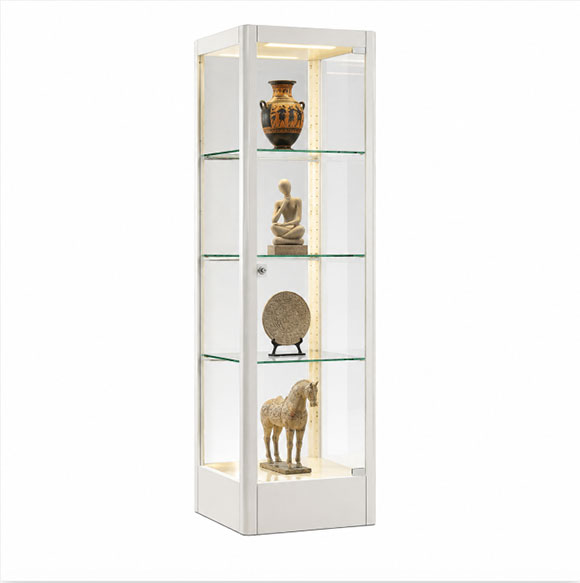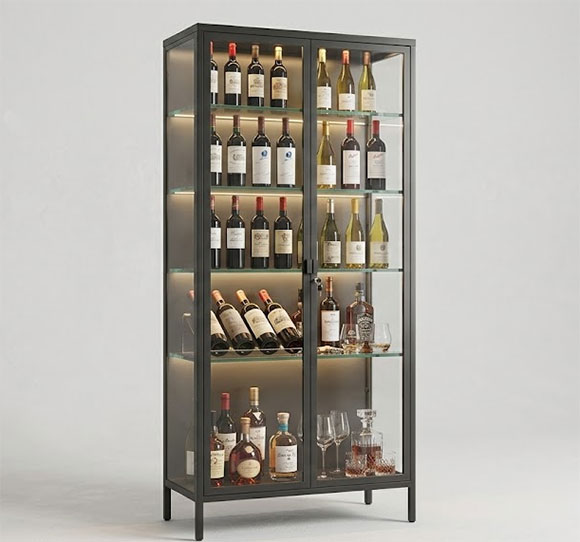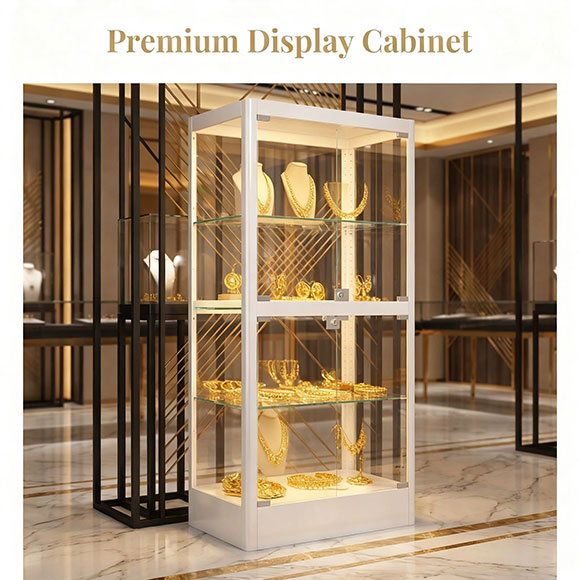
Trading Card Display Cabinet with Glass Door — Lockable Showcase for Card Shops and Collectors
Your best cards are worth real money — display them like it
Trading cards changed. What used to be a childhood hobby is now a serious market, with single cards selling for more than a new car. For card shop owners, that means the wall display is a sales floor and a security risk at the same time. For collectors, it means a binder in a drawer is where collections go to be forgotten. A trading card display cabinet with glass door solves both sides: it shows the collection, keeps it clean, and locks it.
This guide is for card shop owners planning their store layout and collectors setting up a display at home. It covers what to look for, how to arrange cards so they sell or show well, and how to protect the value in the case.
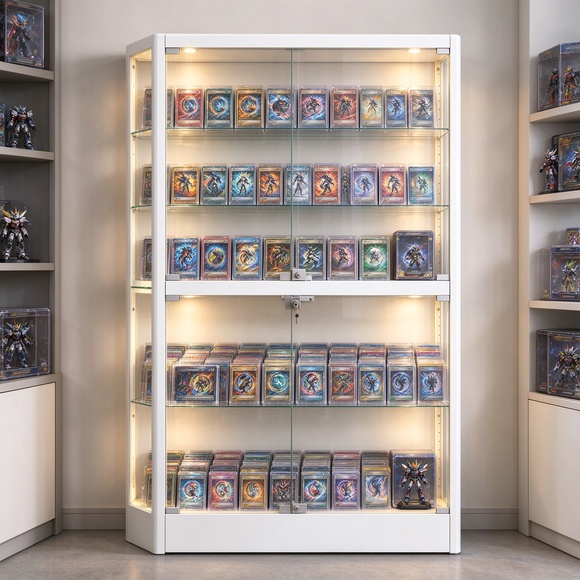
Why trading cards need a real display case
- Cards are small — glass makes them count. A card on a shelf disappears. A card behind glass, framed by the cabinet, reads as something worth looking at and worth paying for.
- Dust and light damage value. Open shelves collect dust on card surfaces and sleeves. A sealed glass case slows that down.
- High-value stock needs a lock. In a card shop, the case is open to the public all day. A lockable door protects the expensive singles while still showing them.
- An organized case sells more. Shops that display singles by set and rarity report customers browsing longer and asking for the case key more often.
Card shop vs. home collection: what changes
| Factor | Card shop display | Home collector display |
|---|---|---|
| Traffic | Public, daily, all day | Private, occasional |
| Security need | High — lock is essential | Medium — lock still useful |
| Arrangement | By set, rarity, price | By theme, series, favorite |
| Best placement | Behind counter or on a wall | Living room, office, game room |
| Case size | Large, floor-standing | Medium, can be compact |
| Cleaning cycle | Weekly glass wipe | Monthly |
One cabinet can serve both, but the spec changes with the traffic. A shop case gets handled more, wiped more, and stared at more. Buy the durability to match.
What to check before you buy
Walk through this checklist whether you are buying for a store or a living room.
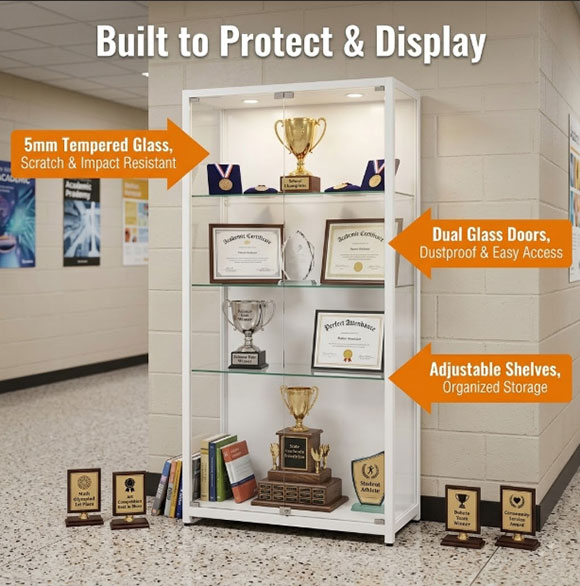
- Tempered glass doors. Public spaces and busy rooms both see accidents. Tempered glass is the safety baseline — it resists impact and breaks into blunt pieces.
- A lock that actually locks. In a shop, “lockable” must mean a working key lock, not a decorative catch. Confirm the lock type before you order.
- Shelves that fit cards, not just boxes. Card slabs, top loaders, and display frames come in different depths. Check the shelf depth and pitch against your display method.
- Adjustable shelves. Your collection changes with every release. Adjustable shelves keep the case useful instead of forcing a new layout every few months.
- A frame that cleans up. Card shops live on glass cleaning. A powder-coated steel frame survives the routine and the chemicals.
- Lighting that shows the cards. LEDs over the shelves make cards pop. Confirm whether the model includes lighting or accepts an add-on.
How to arrange a card case that sells — or shows
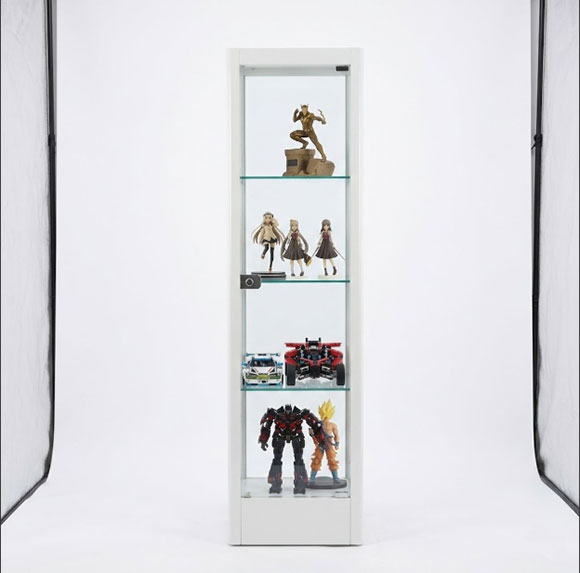
- Put the money cards at eye level. The expensive singles sell first when they are easiest to see. Bottom shelves are for bulk and binders.
- Group by set, then rarity. A collector reads a story: set, then the chase cards. Shops that group this way make the browsing obvious.
- Face the cards, not the backs. Stand-up display frames or slab stands keep the art visible. Cards lying flat in a case are storage, not display.
- Leave room between rows. Cramped rows look like inventory. Spacing reads as a curated collection and makes each card easier to lift out.
- Rotate the featured row. New releases and high-value pickups go to the front. A case that changes keeps regulars looking.
Protecting card value inside the case
- Sleeve everything that shows. The card on display is the card that gets handled. Sleeves and top loaders protect surface and corners.
- Keep it out of direct sun. Even behind glass, long-term direct sunlight fades card art. Position the case away from south-facing windows.
- Control humidity in humid regions. Cardboard absorbs moisture and warps. In coastal or humid climates, add a small desiccant pack on a shelf.
- Wipe the glass, not the cards. Fingerprints come off the glass. Cards come out only when they move to a new row.
- Inventory what is in the case. Shops keep a list of the displayed singles with values. It protects against theft and insurance claims.
Where the case earns its keep in a card shop
- Behind the counter. The classic spot. Staff can see it, reach it, and unlock it without leaving the register. The display does the selling while the counter does the transaction.
- On the wall above play tables. Players see the showcase during every match. Singles displayed there move when players look up between games.
- At the entrance as the anchor. The first thing a walk-in sees sets the store’s level. A lit case of high-value singles at the door says this shop takes cards seriously.
- Next to the singles counter. Where customers already browse, one more case extends the browsing time — and browsing time is what sells the middle-tier cards.
Buying for a shop or a collection
- Measure the wall or corner first. The cabinet has to fit the space before it fits the cards. Confirm the exact dimensions in writing.
- Compare the same spec, not just the price. Glass type, lock type, frame material, and shelf count — line them up across quotes.
- Ask about the lock and keys. How many keys come with it? Can spare keys and locks be ordered later?
- Confirm delivery and assembly. Is it KD (knock-down) flat-packed or assembled? That decides who sets it up and how long it takes.
- Check MOQ and lead time. For shops buying several units, confirm the wholesale terms in the quotation.
Why HNJUNTUO for card and collectible display cabinets
We are HNJUNTUO, an export factory in Luoyang, China, manufacturing glass display cabinets for retail and home collectors. We supply card shops, game stores, and collectible retailers — not just single units. OEM and ODM are available: custom size, custom color, your logo on the cabinet, and packaging matched to your market.
Send us your quantity, the wall dimensions, and your target price. We reply within 24 hours with a written quotation including specs, packaging, and lead time.
FAQ
Can a display cabinet hold graded card slabs?
Check the shelf depth and pitch against your display method. Slabs and top loaders are thicker than raw cards — measure yours against the shelf before ordering.
Are the glass doors tempered?
Yes, the display cabinets we supply use tempered glass for the doors and shelves. Confirm the glass specification for the model you choose.
Do the cabinets come with locks?
Yes, the lockable models include a key lock on the doors. Confirm the lock type and key count for the model you choose.
Can we get custom sizes or branding for a card shop?
Yes. Custom dimensions, color, shelf count, and logo are available for wholesale orders. Send your store drawings and we will confirm the configuration.
What is the minimum order quantity?
MOQ depends on the model and whether the order is standard or custom. It is confirmed in the quotation.