How to Prevent Dust Damage on Your Collectible Display Items — Practical Tips for Shop Owners
You spent hours setting up the display area in your shop. Action figures lined up perfectly. Building block models dusted off one by one. Everything looked exactly how you wanted it.Then you came back two weeks later.A thin layer of dust had settled on the glass. A fine coating covered the shelves. Some of the harder-to-reach spots inside the figurine joints? Those were practically impossible to clean without disassembling the item.
Here is the thing: this is not about how often you clean. Dust is the silent enemy of displayed merchandise — especially in street-facing stores, workshops, or any space with decent ventilation. It does not just make your products “look a bit old.” It quietly pulls down your sales conversion rate, because when a customer sees dust on a display item, their subconscious reaction is: “How long has this been sitting here? Must be old stock.”
This article is not theory. It is based on what we have learned from the factory side of the display cabinet industry — the real cost of dust, why open shelving is a losing battle, and why a properly sealed glass display cabinet solves about 80% of the problem before you even pick up a cloth.
What Dust Is Actually Costing You — Let Us Do the Math
Start with cleaning costs. A 30-square-meter collectible shop with 5–8 open shelving units requires at least 40–60 minutes of dusting per week. That adds up to roughly 35–50 hours a year. At even a modest hourly rate, you are looking at 300–500 in labor costs annually — and that does not include consumables: microfiber cloths, anti-static brushes, compressed air cans. Add those in, and you cross $600 per year easily.
Here is the part that stings: that $600 bought you nothing except “staying where you were.” The shelves were clean last week, and you cleaned them again this week. Zero progress.
Now think about the items themselves. Dust is not just dirt. It is a gritty cocktail of textile fibers, dead skin cells, pollen, and microscopic mineral particles. When these particles settle on a building block model’s glossy surface, they act like fine sandpaper every time someone brushes past or picks the item up. On action figures, dust works its way into painted creases and transparent parts — areas where repeated rubbing gradually wears away the paint finish. That fresh-out-of-the-box sheen? Once it is gone from friction with trapped dust particles, it is gone for good.
Worse still, dust absorbs moisture from the air. This means metal joints begin to rust. Paper packaging and labels yellow prematurely. Acrylic panels develop a cloudy haze. The root cause is almost always that thin layer of dust that nobody thought was urgent enough to deal with.
Then there is the customer. When a shopper sees dusty merchandise, their brain does not think “this shop is messy.” It thinks “this product has been here too long — probably unsold inventory.” That split-second judgment kills trust before you even get a chance to say hello. Flip the situation: a display cabinet with clean tempered glass and even LED lighting makes every item look like a premium piece straight out of the box. Customers stop. They look closer. They pull out their phone to take a photo. Every extra second of dwell time increases the chance of a sale.
Bottom line: the question is not “should I clean more often.” The question is “how do I stop dust from landing on my products in the first place.”
Why Open Shelving Cannot Win Against Dust
Many shop owners start with open shelving because it is cheap and customers can pick things up freely. A few months in, three realities become impossible to ignore:
1. Dust accumulates way faster than you expect. For street-facing shops, it is even worse — vehicle exhaust particulates from the road plus foot traffic dust create a constant airborne particle stream. Here is a simple test: place a sheet of white paper on the top shelf of your open display. Leave it for 48 hours. Run your finger across it. Most shop owners are genuinely shocked at what they see.
2. Cleaning creates more risk than protection. Action figures and building block models are precision items. Constantly picking them up to wipe them down leads to loose joints, detached accessories, and scratched paint. We have heard from more than one shop owner who accidentally knocked a limited-edition figure off the shelf while dusting — the tiny broken piece went straight into the vacuum cleaner, never to be seen again. The figure had to be sold at a steep discount. The more you clean, the more you risk.

3. Open shelves signal “budget” — not “premium.” The exact same item displayed on open metal shelving versus inside a glass display cabinet with LED lighting commands a different perceived value. This is not a guess; it is decades of retail psychology. How an item is presented directly shapes what a customer is willing to pay for it.
Open shelving is not bad design. It just offers nearly zero protection for your merchandise. For shop owners who want to build a quality reputation while reducing daily maintenance grind, a sealed glass display cabinet is the rational next step.
Sealed Glass Display Cabinets — The Real Solution
The core principle of dust prevention is not “wipe more often.” It is physical isolation.
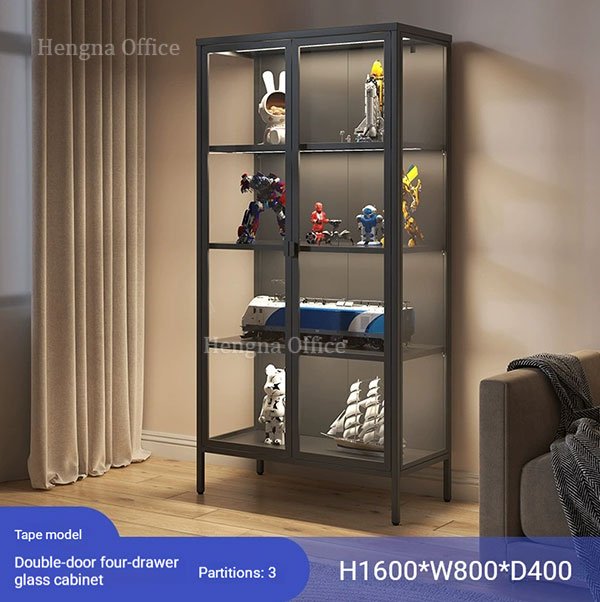
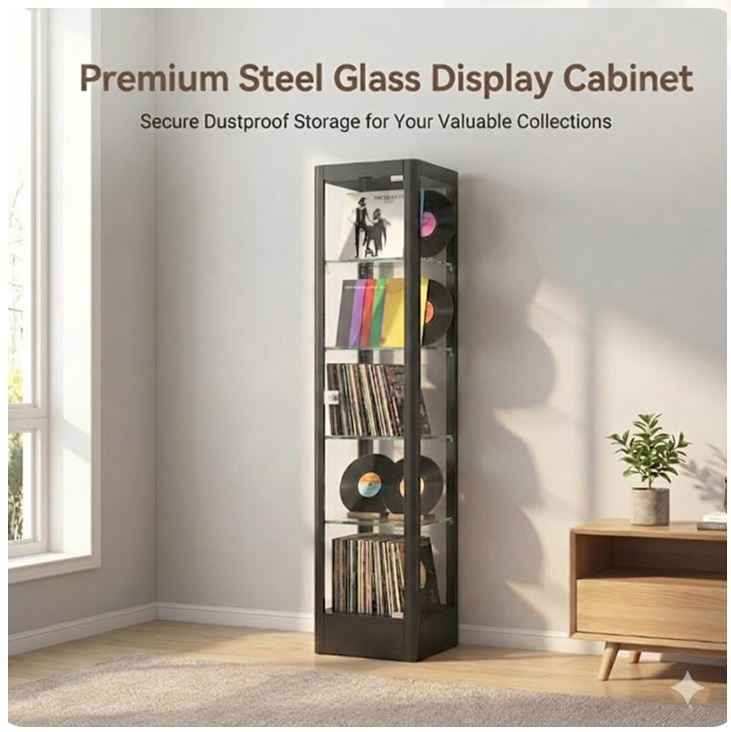
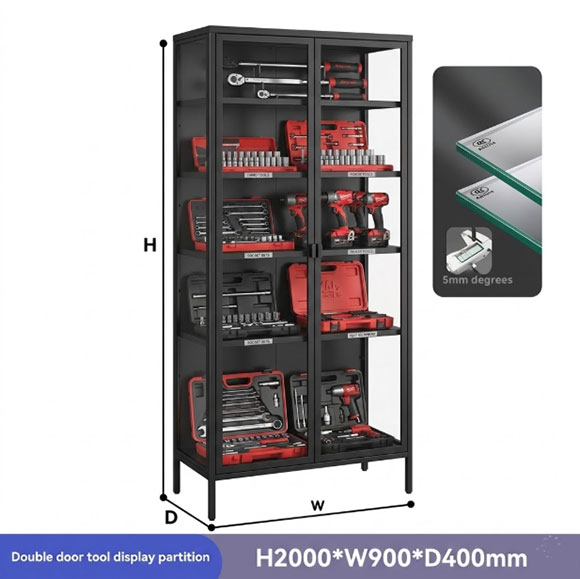
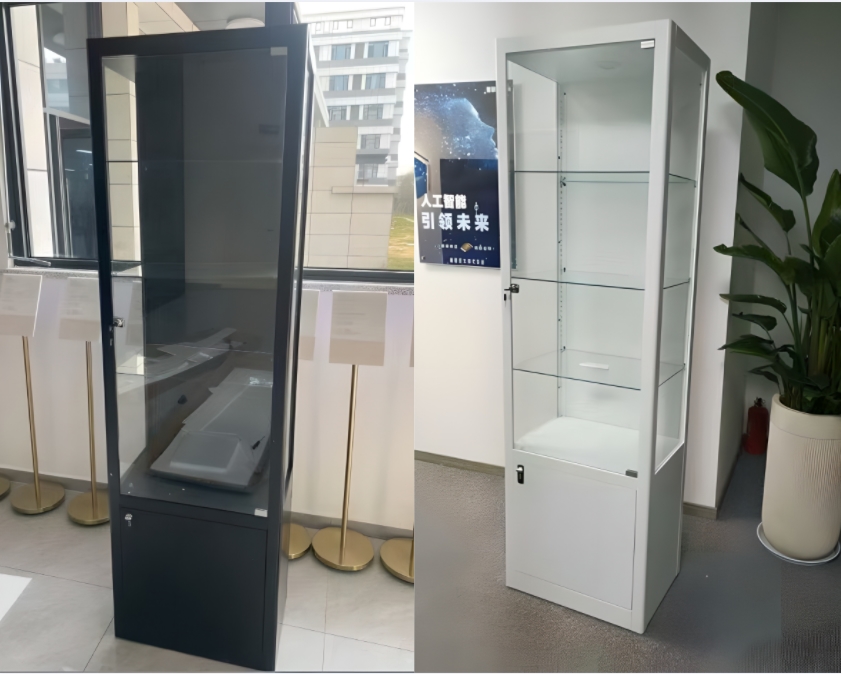
A properly built sealed display cabinet consists of three elements working together: a tempered glass door, a cold-rolled steel frame, and rubber seal strips along the door edges. When the door closes, the seal compresses and creates a near-airtight barrier. Air exchange drops to a minimum, and airborne dust simply cannot get inside. The principle is as straightforward as putting a case on your phone to keep the screen clean — except in a retail setting, the benefits go well beyond dust control:
You save time — a lot of it. Instead of weekly dusting sessions, a sealed cabinet may only need a quick wipe every one to three months. One shop owner told us he replaced six open shelving units with sealed glass display cabinets and reclaimed nearly an hour every week — that is 50 hours a year. He used the extra time to photograph new arrivals and post on social media. Within three months, walk-in traffic from his online posts had nearly doubled.
You protect your inventory. A sealed cabinet blocks dust and moisture simultaneously. For building block sets with metal components, or shops in humid climates like Southeast Asia or the southern US, the moisture-blocking benefit is just as important as the dust protection. Once a metal part rusts on a collectible, the damage is permanent.
Your displays look professional. Combine a sealed cabinet with built-in LED lighting, and every item looks like a gallery piece. This matters when customers take photos to share on social media. A display cabinet with clean glass and even, glare-free lighting produces images people actually want to post — every share is free marketing for your shop.
A quick note on acrylic: acrylic has decent light transmission, but it has a serious flaw — static electricity. Acrylic panels actively attract dust particles from the air, and they scratch easily when you wipe them. After six months, an acrylic display case looks hazy and tired. For a shop that needs to look good long-term, tempered glass is the clearly better investment.

5 Things to Check When Choosing a Dust-Proof Display Cabinet
If you are planning to upgrade your shop’s display setup, pay attention to these five details:
1. Inspect the door gap. The real secret to a good seal is not the cabinet body — it is the door fit. Quality cabinets include rubber seal strips along the door perimeter that compress when closed. A practical test: slip a piece of paper between the door and the frame, close the door, and try to pull it out. If it resists or tears, the seal is working. We use this same test during factory inspections.
2. Insist on tempered glass, not ordinary glass. 3C-certified tempered safety glass has 3–5 times the impact resistance of standard glass. If it breaks, it shatters into blunt granules, not dangerous shards. Real scenario: a customer’s child running in a toy store bumps into a glass door. Ordinary glass may crack or shatter. Tempered safety glass might get a scuff mark — or nothing at all.
3. Choose a steel frame, not wood. Wood looks classic, but it absorbs moisture. In fluctuating humidity, wood frames expand and contract, and after a couple of years you may see visible gaps between door and frame. Cold-rolled steel frames do not warp. The seal stays consistent for a decade or more.
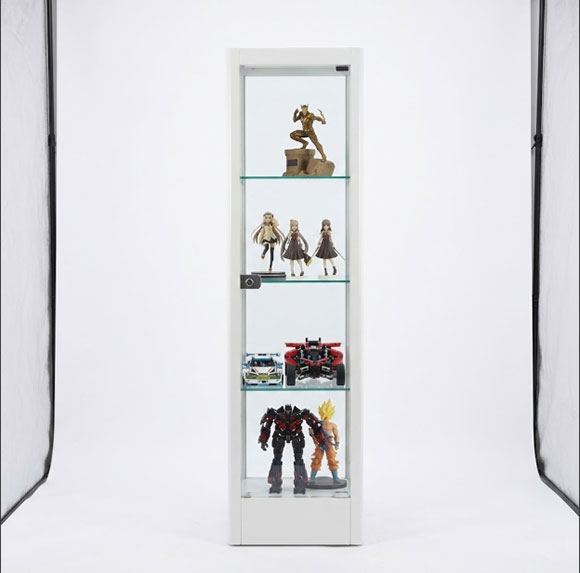
4. Shelves must be removable and adjustable. Removable shelves let you clean properly. Adjustable height means one cabinet type handles everything — large 1/6 scale figures on the bottom, mid-size model cars in the middle, mini blind box figures on top.
5. Stick to black or white finishes. Black and white blend into any interior style. Dust is easier to spot on solid black or white than on wood grain. Also, if you expand later, black and white from the same factory line have no color-matching issues. Wood grain rarely matches perfectly across batches.
Daily Maintenance Tips
- Drop a silica gel packet inside each cabinet. Costs pennies, absorbs residual humidity. Replace every two months in humid seasons, every three to four months in dry periods.
- Check the door seal strips periodically. If the rubber stiffens, replace it. A new strip costs very little. Typical lifespan is 2–3 years.
- Minimize unnecessary door opening. Put your bestsellers or frequently inspected items on the same shelf so you only open one tier for demos.
- Use a microfiber cloth for glass, not a wet rag. Wet cloths leave streak marks. For fingerprints, spray glass cleaner onto the cloth, not directly onto the glass, and wipe in circles.
- Let new cabinets air out for 24 hours. Brand-new cabinets may carry a mild factory scent. Leave the door open in a ventilated area overnight. It dissipates completely.
Final Thoughts
Dust problems in retail display look small day to day but accumulate into something expensive over months and years. It is never urgent, but every month it quietly eats your labor hours, degrades your merchandise, and chips away at the visual quality of your store.
Upgrading from open shelving to sealed tempered glass display cabinets is a trade: a one-time equipment investment for long-term peace of mind. Products that look clean keep customers browsing longer. Customers who browse longer are customers who buy.
Hengna is a factory-direct manufacturer specializing in cold-rolled steel frame display cabinets with 3C-certified tempered glass doors. Our cabinets feature fully sealed construction, adjustable shelves, and optional built-in LED lighting. We support bulk wholesale orders and custom sizing. If you are planning a new display section for your shop — or ready to replace those dust-gathering open shelves — we would be happy to help.
Frequently Asked Questions
Q1: Does tempered glass turn yellow over time?
No. Tempered glass has high chemical stability and does not yellow with UV exposure the way acrylic does. Its clarity holds for years with periodic cleaning.
Q2: Does a sealed display cabinet get stuffy or trap heat?
Not under normal conditions. The glass door and steel frame naturally dissipate heat. If your store has strong direct sunlight, use LED cool-light fixtures rather than halogen bulbs. For collectibles with strict humidity requirements, a small USB-powered dehumidifier inside the cabinet provides extra control.
Q3: How often do sealed display cabinets need cleaning?
Compared to open shelving needing weekly attention, a sealed cabinet typically only needs a light clean every 1–3 months. If the door is rarely opened, the interval can be even longer.
Q4: Why recommend tempered glass over acrylic?
Acrylic’s main weakness is static electricity, which actively attracts airborne dust. It also scratches easily — add one micro-scratch per cleaning session, and the panel looks foggy within six months. Tempered glass generates no static charge, resists scratching, and maintains clarity long-term.
Q5: Is it safe to place a display cabinet near a window?
Direct sunlight can cause gradual fading on painted figure surfaces. Where possible, avoid direct sun. Tempered glass blocks roughly 30% more UV than standard glass, but curtains or UV-filtering window film are recommended if strong exposure is unavoidable.
Q6: Does the glass break during shipping?
3C-certified tempered safety glass, properly packed, has an extremely low breakage rate. Standard factory packing separates glass panels from the cabinet frame, with foam corner protectors and honeycomb cardboard reinforcement around each panel. Inspect the outer packaging for impact marks before signing off — if the box looks clean, the glass inside is almost certainly intact.
Explore more: Multi-Tier Dustproof Cabinets for Collectors | Sealed Showcase Cabinets with Rubber Gasket